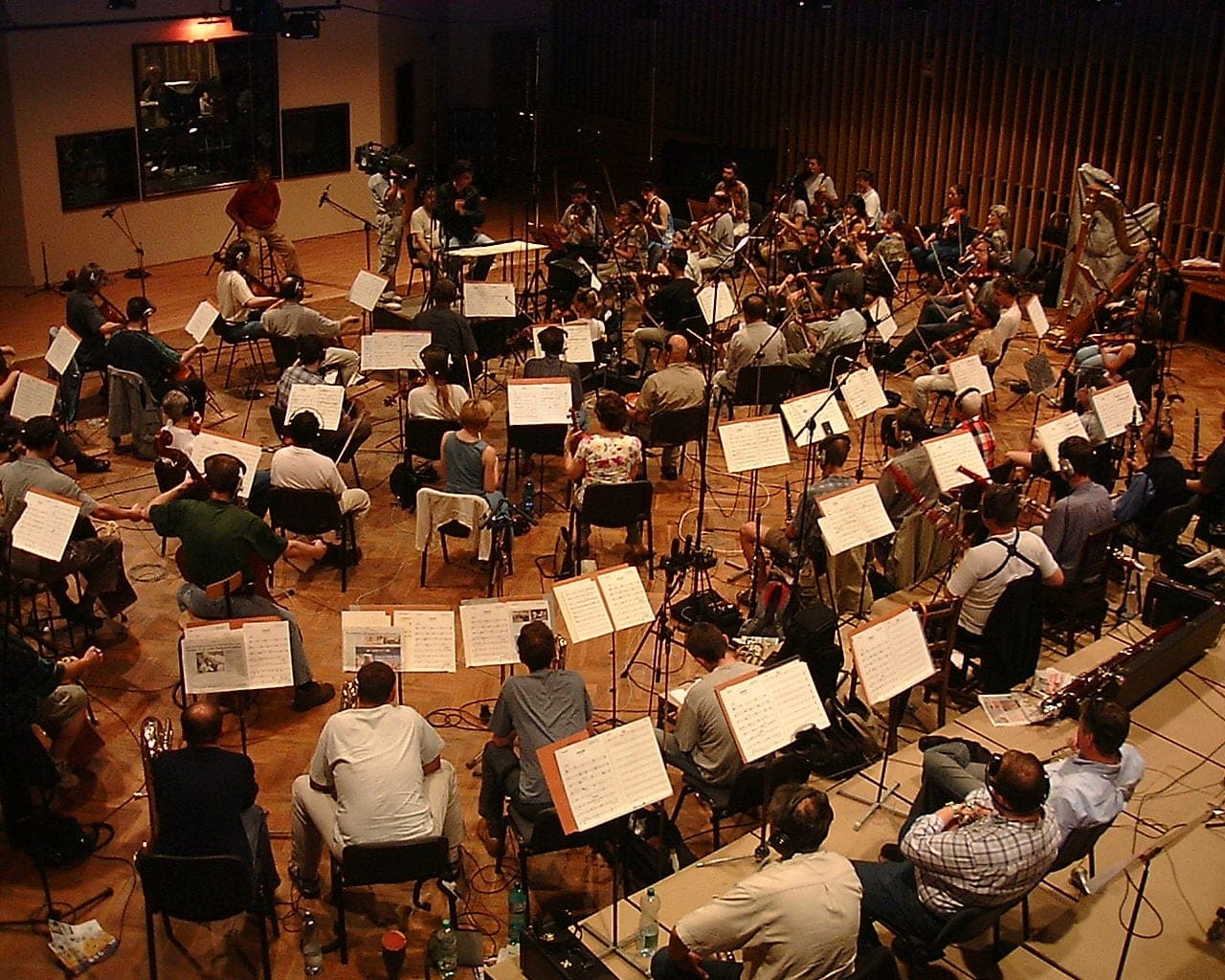
Most film scores carry the name of one composer. For Behemoth!, his upcoming film set in the world of movie scoring, director Tony Gilroy brought in nine, according to a Spotify newsroom feature published before the film reaches theaters on December 4. Pedro Pascal plays the lead, Alex Serian, a cellist with classical training whose comeback in film music brings old memories to the surface.
Spotify said Gilroy and Pascal discussed the music with Edith Bowman, host of Soundtracking, during a visit to its Listening Lounge in London.
Composers cast like actors
Gilroy said the choice grew out of the plot. In the film, music cues that Alex edits into the picture he is working on spark flashbacks, so Gilroy needed an assortment of invented movies for that music to belong to. He said he preferred hiring nine composers to having a single writer switch styles for every fake title, and that he picked them the way he would cast performers, matching people to the particular slots that interested them. Bowman referred to the group as The Behemoth! Collective and noted that it mixes past Gilroy collaborators with newcomers.
Two songs, two jobs
Henry Jackman wrote "Spies Don't Run." Gilroy said it is Alex's opening cue, heard during his first session after returning to L.A., as he scores the closing shot of a movie-within-the-movie featuring a snowstorm, a chase and an escape. Gilroy said he encouraged Jackman to hold nothing back. Because the same music accompanies Alex's flashback, Gilroy described it as the point where viewers first learn how the real film operates, which made it significant on several levels.
"Your God Is Sleeping" took a different route. Gilroy said he and James Newton Howard drafted an early version they liked, intending composer Lukas Frank and his band, Storefront Church, to perform it. Frank's verdict, according to Gilroy, was that it was good but sounded old, so Gilroy invited him to keep only the title and start fresh. The replacement arrived a couple of days later and, Gilroy said, astonished him. Pascal recalled the band performing live inside a warehouse on the day of filming, letting the crew capture both the musicians and his character watching them. He counted it among his favorite shooting days ever.
Pascal on Alex
Pascal described Alex as unflinchingly honest about his own life and true to himself, someone whose main way of expressing himself, possibly his only one, is music. He noted that the character's mother was composing film scores while pregnant with him, making music the first sound he ever heard. Yet that fluency also lands Alex in trouble, Pascal said, leaving him in a conflicted state: intensely present, but somehow absent for certain people close to him.
Bowman singled out a side story involving Olivia Wilde's character as joyful and funny. Pascal said that role had been among his favorites when he read the script, and that he was delighted when Wilde was cast. He said the storyline is there because even the film's weightier human moments always carry some humor.
Where the idea began
Gilroy traced the project to Michael Clayton, where composer James Newton Howard acted as his guide to scoring. Later, recording the Rogue One: A Star Wars Story score with Michael Giacchino, amid a vast orchestra, pressing deadlines and crowds of people on the move, left him convinced day after day that the process deserved a movie of its own.