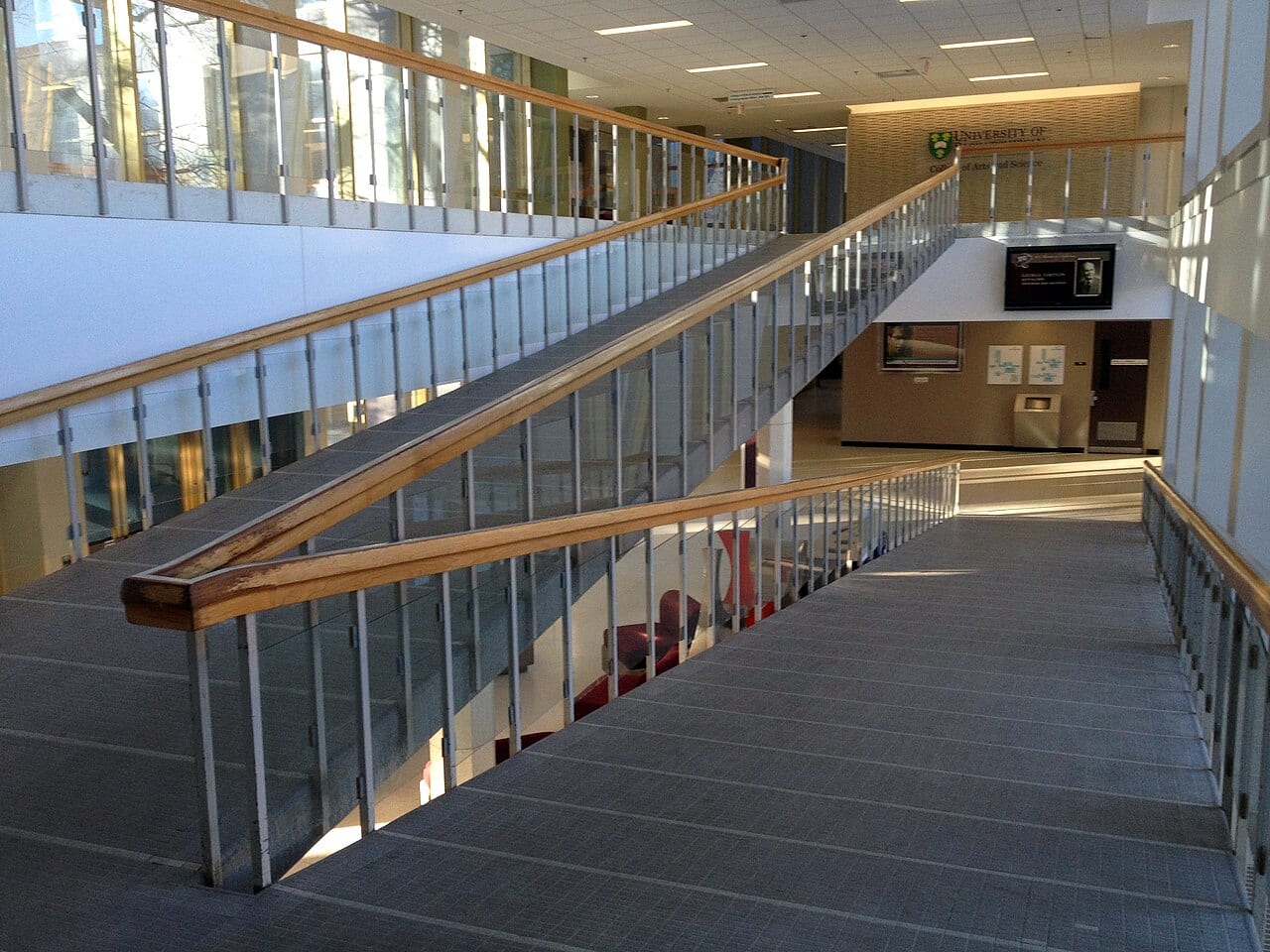
A civil society organization in Kyrgyzstan, the Oasis public foundation, is working to record the physical obstacles that people with disabilities encounter in Bishkek, the capital. According to the organization itself, speaking to Global Voices in a written interview, it is participants with disabilities who judge the spaces based on their daily experience. The work is part of the Digital Sparks programme.
The data collected so far
Oasis says its participants have already analyzed 350 buildings in the city and that their observations feed the city's accessibility map in the form of geolocated data. Of that set, the organization states, 60.3% had some obstacle related to ramps: in some cases the ramp was missing, and in others the existing one was unsuitable or awkward to use. Oasis adds that the project makes it possible to compare the situation between districts and between categories of buildings.
The tool and the working group
The organization adopted the UrbanEyes app. With it, participants rate each building using geolocation, photos, questionnaires and common accessibility indicators. A web platform then presents the information on an interactive map with filters, heat maps and indexes. Oasis Data Lab brought together more than 30 young people, among them people with physical disabilities, blindness or low vision, and deafness, as well as activists and urban specialists, who received workshops on rights, data collection, mapping and storytelling.
Pending commitments
Global Voices recalls that Kyrgyzstan ratified the UN convention on the rights of persons with disabilities in 2019 and that, seven years later, progress remains scarce. According to that outlet, the Government has not given this commitment the priority the community demands. More than 218,000 people with disabilities live in the country, roughly 3% of the population. Oasis maintains that earlier analyses were limited and did not leave an up-to-date public record for monitoring progress.
For the organization, direct experience reveals what a conventional inspection can miss: a form can confirm that a ramp exists, but a wheelchair user can find that it is too steep, slippery or narrow, or that it has no handrail.
Plans for the future
Oasis plans to turn Oasis Data Lab into a permanent centre for civic innovation and evidence, update the data regularly and present it to the Bishkek city hall, the Ministry of Labour, Social Protection and Migration, civil society organizations and businesses. In the longer term it aims to extend the model to other regions, especially rural ones.
The interview is part of a series on Digital Sparks beneficiaries, part of a project by the Metamorphosis Foundation and TechSoup, in collaboration with CIVICUS.
Sources
- Global Voices en Español (CC BY 3.0)