NASA has featured a telescopic photograph of the Moon's edge in its Astronomy Picture of the Day series. It shows the De Gerlache-Kocher massif standing on the visible horizon. The picture was taken on October 31. Separately, NASA has announced that it has finished building a science instrument meant for astronauts to set up in the same south polar region.
A mountain at the lunar limb
According to NASA's caption, the massif rises roughly 4 kilometers above the terrain around it and sits very close to the lunar south pole. A favorable libration angle, the slight wobble of the Moon, enhanced the oblique view across the pole.
NASA notes that the south polar region has crater floors in permanent shadow that likely hold water ice. Some nearby peaks get nearly constant sunlight, which could supply solar power. For those reasons the caption describes the area as especially attractive for establishing the first human settlement there. It adds that planners have looked at the massif itself as a possible destination for future crewed Artemis flights.
Artemis plans for the south pole
NASA's Artemis pages describe a crewed program aimed at this part of the Moon. The agency says it has identified nine candidate landing regions near the south pole, each containing several potential landing sites.
For Artemis IV, NASA describes a crew of four launching from Kennedy Space Center in Florida on the Space Launch System rocket, inside the Orion spacecraft. Orion would dock with a lander in lunar orbit. Two crew members would then descend to the surface and spend about a week near the south pole doing new science, before rejoining their colleagues for the trip home. During their moonwalks they would wear an advanced spacesuit from Axiom Space.
NASA's student-outreach pages frame the missions differently. They present Artemis III as the flight that takes the first people to the area around the lunar south pole, and say Artemis IV will introduce a lunar space station, a larger SLS rocket and a new mobile launcher. The material reviewed here does not reconcile these descriptions, so the exact order of the first south polar landings is not settled by it.
A seismometer built for astronaut deployment
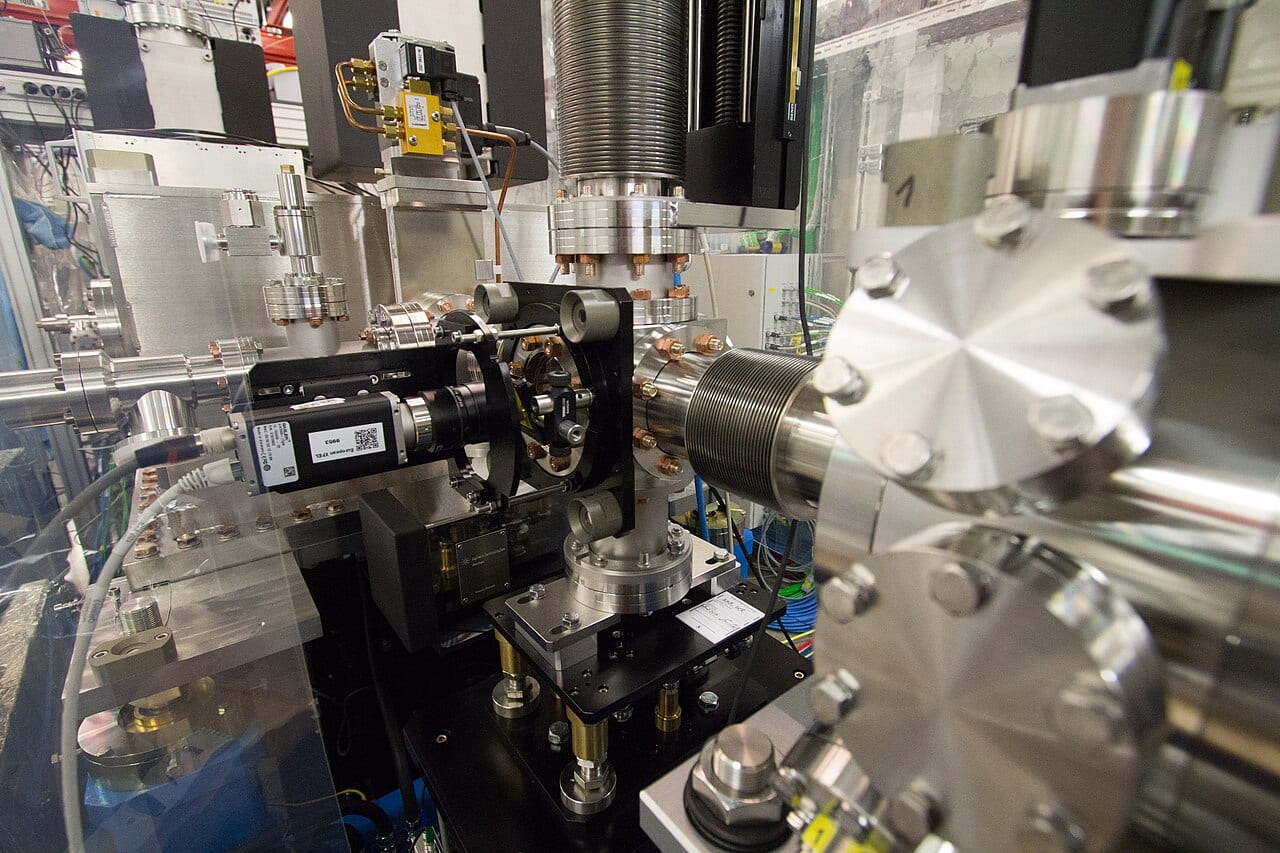
NASA says engineers have declared "wrenches down" on the Lunar Environment Monitoring Station, or LEMS. The agency describes it as the earliest finished instrument package meant for Artemis astronauts to place on the lunar surface. Hardware development and testing are done. The unit stays in the clean room at Goddard in Greenbelt, Maryland, where it was assembled, until it is assigned to an Artemis mission.
LEMS carries two highly sensitive seismometers meant to monitor ground vibrations from moonquakes and meteorite impacts. NASA says the data should give scientists insight into the Moon's interior and into the seismic hazards astronauts could meet on the surface. The agency says no seismometers built for planetary exploration have been smaller, more sensitive or more frugal with energy than these.
The unit is comparable in size to a small suitcase and weighs 11 pounds in the Moon's weak gravity. NASA says it is designed to work without human help once deployed:
- A lightweight, flexible solar array that conforms to the unit's shape supplies its power.
- It follows a preset plan for continuous data collection.
- It transmits data to Earth monthly.
- It keeps a stable internal temperature despite the large day-to-night swings of the polar region.
A biography page for Mehdi Benna of Goddard describes the Artemis III version as having a two-year longevity goal at the south polar region. Benna, a UMBC scientist who heads the LEMS effort from Goddard, said the team's idea was to create "a scientific buoy for the Moon" that is adaptable and can operate independently for years.
Surviving the lunar night
NASA says LEMS was designed to get through the lunar night, a stretch of about two Earth weeks, with no external power or heat source. Earlier lunar surface instruments relied on radioisotope heaters. LEMS instead uses advanced insulation materials, cables that conduct little heat, and a thermal regulator that shifts heat away by day and helps hold it in at night. NASA says this lets it tolerate cold reaching minus 400 degrees Fahrenheit in certain places.
In the last five months, engineers put LEMS and its components through environmental and operational tests. They verified that it can endure launch vibration, the trip to the surface, and the Moon's temperature and radiation environment. They also showed that its mechanical and electrical design is safe for astronauts to handle.
The work builds on a lunar seismic legacy. Apollo astronauts placed seismometers across the near side of the Moon close to the equator between 1969 and 1972. According to NASA, those instruments kept working until 1977 and registered around 13,000 moonquakes and similar ground vibrations. Joel Kearns, NASA's deputy associate administrator for exploration in the Science Mission Directorate, described finishing the LEMS instrument as a major step for lunar surface science.
Two University of Maryland campuses, Baltimore County and College Park, jointly head the payload, while Goddard handles the technical implementation. Arizona's state university teamed up with the company Silicon Audio, Inc. to deliver the pair of seismometers. Morehead State University in Kentucky built the communications system and will operate the instrument once it sits on the surface. Washington University in St. Louis will manage processing of the data and sharing it with the wider scientific community.
Sources
- NASA Science (Public domain (US government work))
- NASA (Public domain (US government work))
- NASA Science (Public domain (US government work))
- NASA (Public domain (US government work))
- NASA Goddard Sciences and Exploration Directorate (Public domain (US government work))