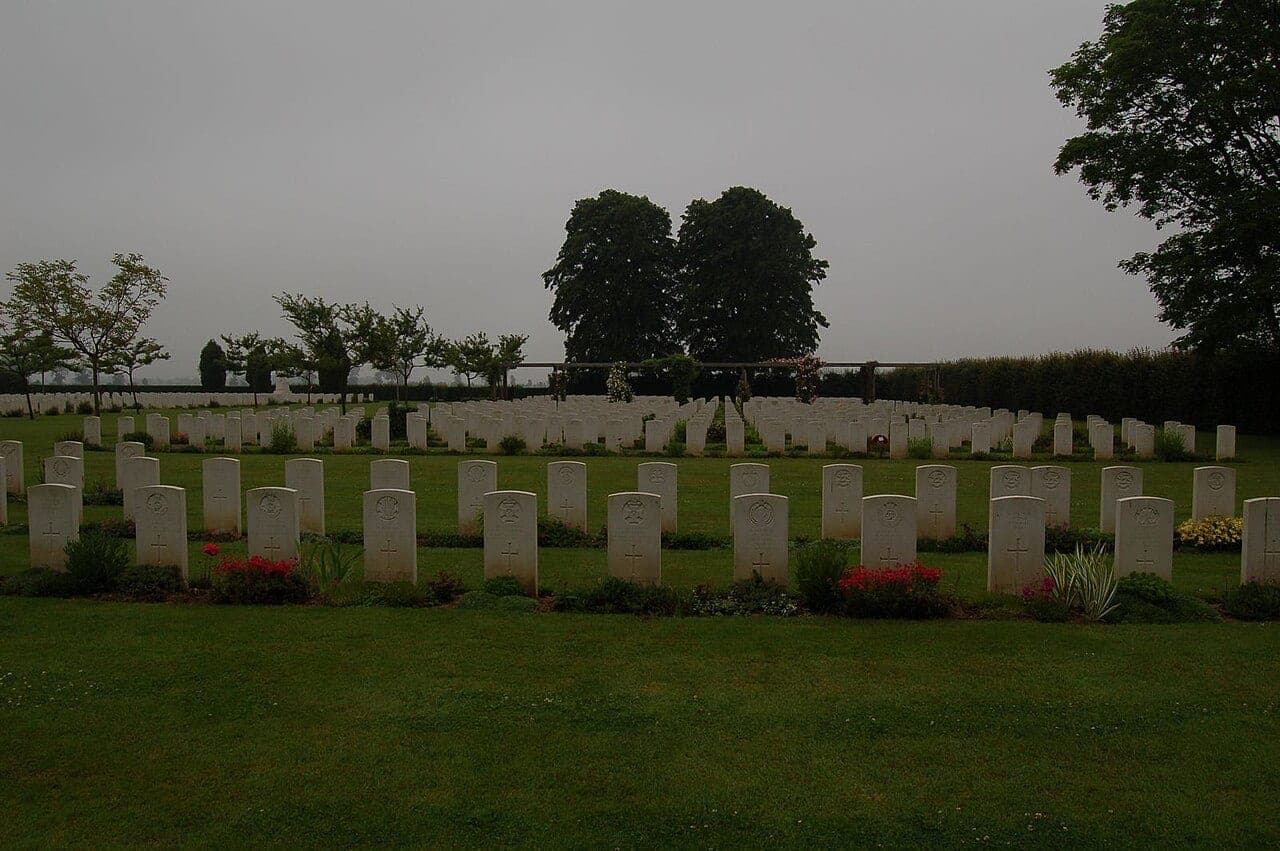
A grave in northern France that carried no name for over a century has been linked to Corporal George Thomas Lloyd, a Bridgnorth man who served with the King's Shropshire Light Infantry in the First World War, the UK government announced. A rededication took place at Grevillers British Cemetery, run by the Commonwealth War Graves Commission (CWGC), on 17 November 2026.
The Ministry of Defence's Joint Casualty and Compassionate Centre (JCCC), nicknamed the 'MOD War Detectives', arranged the event. According to the government, the CWGC has installed a new headstone and will maintain it permanently.
How the identification was made
Two researchers contacted the CWGC in 2020 with evidence pointing to Lloyd as the unknown Corporal in the cemetery. The government said further work by the CWGC, the National Army Museum and the JCCC backed up their suspicion.
Unidentified burials from 1920
In September 1920 a plot in the German cemetery at Grevillers was dug up so the dead could be identified. It had been marked with one cross for a group of unknown British soldiers. The remains went back into the same graves, which are now Plot XII, Row F, graves 1-34.
Seven of the dead had ID discs, while others carried items such as rank insignia, shoulder titles, trade badges and wound stripes. Fifteen were named then, all having died between 22 and 26 March 1918. Twelve more were assigned to a regiment. Thirteen of the 34 were tied to the King's Shropshire Light Infantry. Four stayed unidentified; two had rank insignia, and one was a Corporal recorded with a Signallers badge.
The government said the cross, the location and the range of dates suggest German forces made the burials while clearing the captured battlefield, soon after advancing through Grevillers on 26 March 1918.
Lloyd's war
Lloyd joined the territorial army before the war and was mobilised as a Private. He reached India on 1 December 1914 and went on to Singapore in February 1915. In early 1917 he is known to have been coaching the Signalling Section of the Hong Kong Volunteer Reserves, and he left for France with the battalion in May of that year.
The 1/4th battalion landed in France on 27 July 1917 and saw action at Passchendaele that October. By March 1918 it was in the Somme region. From 21 to 26 March 1918 it lost 57 men. Thirty-nine are named on the Arras Memorial to the Missing because their burial sites could not be established after the war, and Lloyd was one of them.
Dr Daniel Seaton, Commemorations Case Officer at the CWGC, said the identification lets the organisation say with certainty where Lloyd's journey from India and Hong Kong to the Western Front ended.