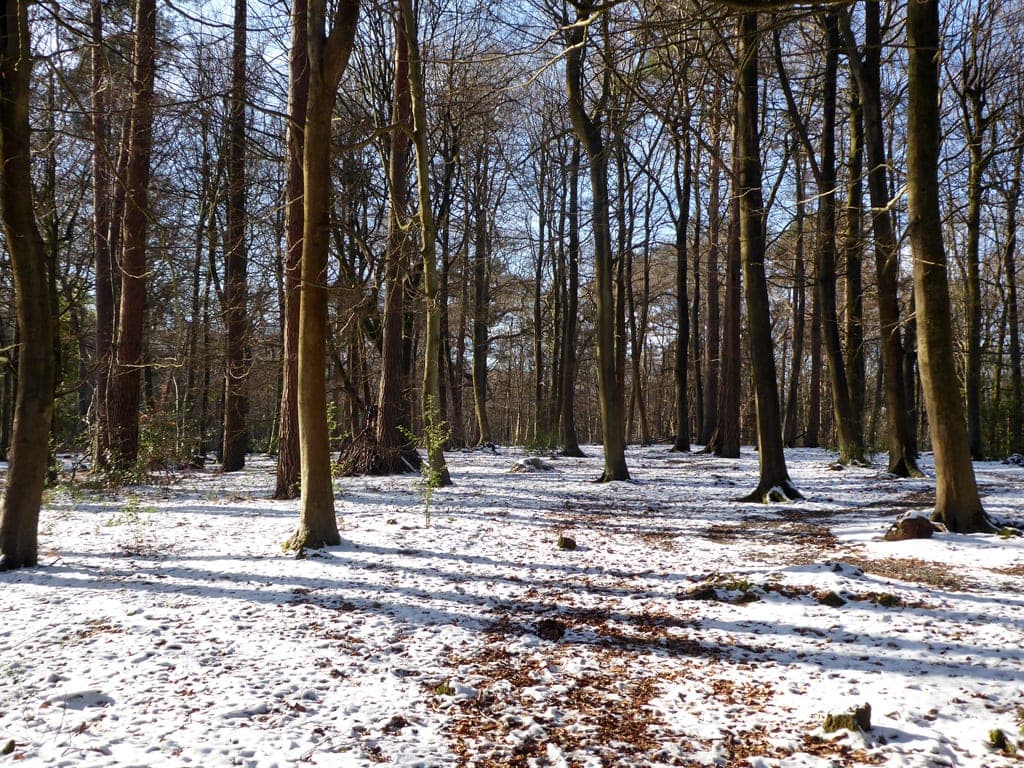
The government released its Trees Action Plan for England on Thursday 26 November. The plan describes how more trees will be planted and how more people will get access to woodland. According to GOV.UK, more than £1 billion of investment this parliament stands behind it.
A second national forest
The government confirmed a proposed 700 square mile footprint for England's second new national forest. Bedford, Huntingdon, Biggleswade, St Neots, Sandy, Cambourne and Milton Keynes all sit inside the proposed boundary. So does Tempsford, where a new town is proposed, along with the land following the River Great Ouse and the East-West Rail line.
The Forest of Marston Vale Trust has been named delivery partner. Local stakeholder engagement will settle the boundary and name, with an announcement due in March 2027. National Forest Chief Executive John Everitt described this as the second of the three planned forests, coming after the Western Forest's 2025 launch.
New public woodland and community planting
Forestry England will manage 3,700 hectares of newly created woodland open to the public, to be in place by March 2030. The government says this equals 5,000 football pitches.
The plan builds on the £53 million Community Trees Fund, set to open early next year. The government says that fund should help communities plant as many as 500,000 trees outside woodlands, including in deprived areas. Just 26% of adults living in the poorest neighbourhoods have green space near their home, the government said, versus 38% in the least deprived. Planting in urban settings also brings climate benefits: according to the government, street trees in cities can lower air temperatures by up to 4°C.
A new body, the National Estate for Nature, will for the first time gather major landowners to look at opening up more woodland. Participants are expected to range from the RSPB to the Crown Estate, alongside government departments, voluntary groups and private landholders.
Funding, targets and reaction
- More than £14 million for sector support, including training and forestry skills grants.
- Over £20m for research on trees, forestry and tree health.
- A new target to bring more neglected woodland into management.
- Wider tree species diversity, stronger tree health surveillance and biosecurity, and funding for domestic seed propagation and planting stock.
The government says planting in England has reached its highest rate since 2004 over the last two years. It says the plan points towards the Environment Act 2021 goal of at least 16.5% tree and woodland canopy cover by the end of 2050, and towards 43,000 hectares (net) of extra canopy and woodland by 2030 under the Environmental Improvement Plan.
Environment Secretary Dame Angela Eagle said the plan widens public access to nature and uses trees to build resilience to climate change. Woodland Trust chief executive Darren Moorcroft said it treats trees as critical infrastructure, while Forestry Commission Chair Baroness Young welcomed greater focus on protecting existing woodlands.