Microsoft says its Microsoft Discovery platform is built to treat failed experiments as useful research material rather than lost effort. In a post on its technical community blog, the company describes Discovery as a purpose-built AI platform for science and engineering. The claims below come from Microsoft itself and are not independently verified.
Battery research with failed rounds
Microsoft points to joint work on organic redox flow batteries with Yale Engineering, Canam Bioresearch and Pacific Northwest National Laboratory. According to the company, Discovery explored several molecular designs over multiple rounds. In one round, none of the parallel explorations yielded a viable candidate. In another, four of six produced candidates worth pursuing.
Microsoft says Discovery retained what it had learned, identified weaknesses in its own predictive tools and changed its approach. In the following round, the company says, four of six explorations succeeded. It credits a feature called Discovery Bookshelf, which stores the reasoning, evidence and lessons behind results so later investigations can build on them.
A cooling-fluid candidate, not a finished product
Microsoft also says its researchers used Discovery to find a novel immersion-cooling prototype for datacenters in approximately 200 hours, pairing AI models with high-performance computing simulations. The company stressed that this is not a production-validated coolant. It describes the result as a promising candidate supported by computational evidence and ready for further study.
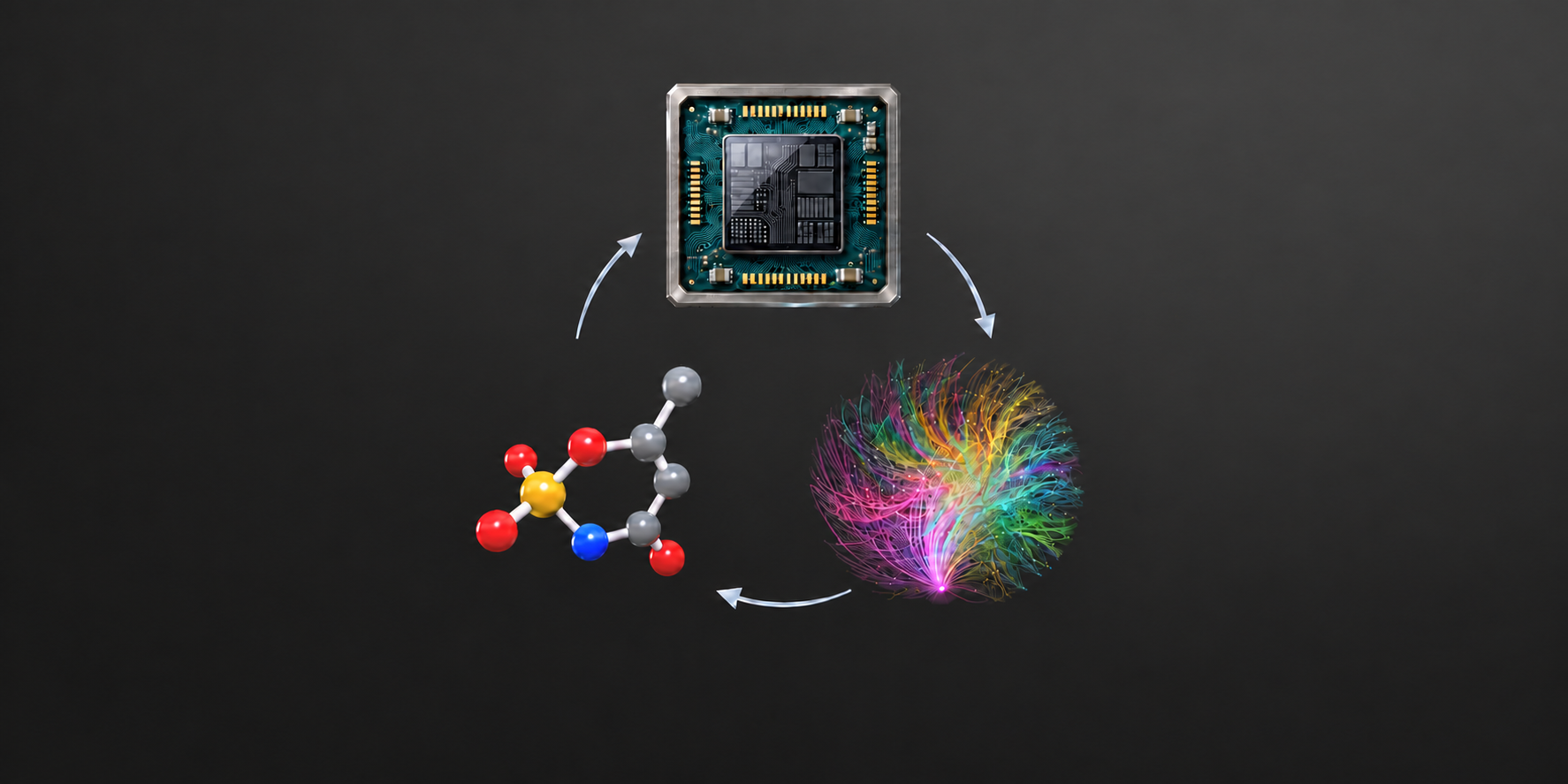
Microsoft says the platform's Discovery Engine is meant to move past single-shot answers. It combines AI reasoning, specialized tools and high-performance computing over extended investigations, while experts decide where the work goes next.
Working directly with molecules
The company adds that users of the Discovery app can view molecular structures, examine them, edit them and carry those edits into an ongoing investigation. Microsoft presents this as a baseline expectation among many of its users, who want to work hands-on with scientific outputs rather than just read them.