In an article published by Global Voices as part of its series on statelessness for July 2026, young Rohingya man Mohammad Asim recounts how he fled Arakan in Myanmar to Bangladesh, and how the loss of nationality became an obstacle to his studies and work. The text is an opinion piece by its author, and what it says about his experience is his personal account.
Fleeing in 2017
Asim says he left his country with his family in 2017, when he was no older than ten. He says he saw fire opened on those who tried to cross the Naf River, which separates south-eastern Bangladesh from north-western Myanmar, and that the bodies of many children were floating on its waters. According to him, the family survived the bullets and completed the crossing, then reached Bangladesh's Shah Porir Dwip island, where border guards refused to let them in. They spent the night there before being allowed to enter the next day.
Life in Kutupalong camp
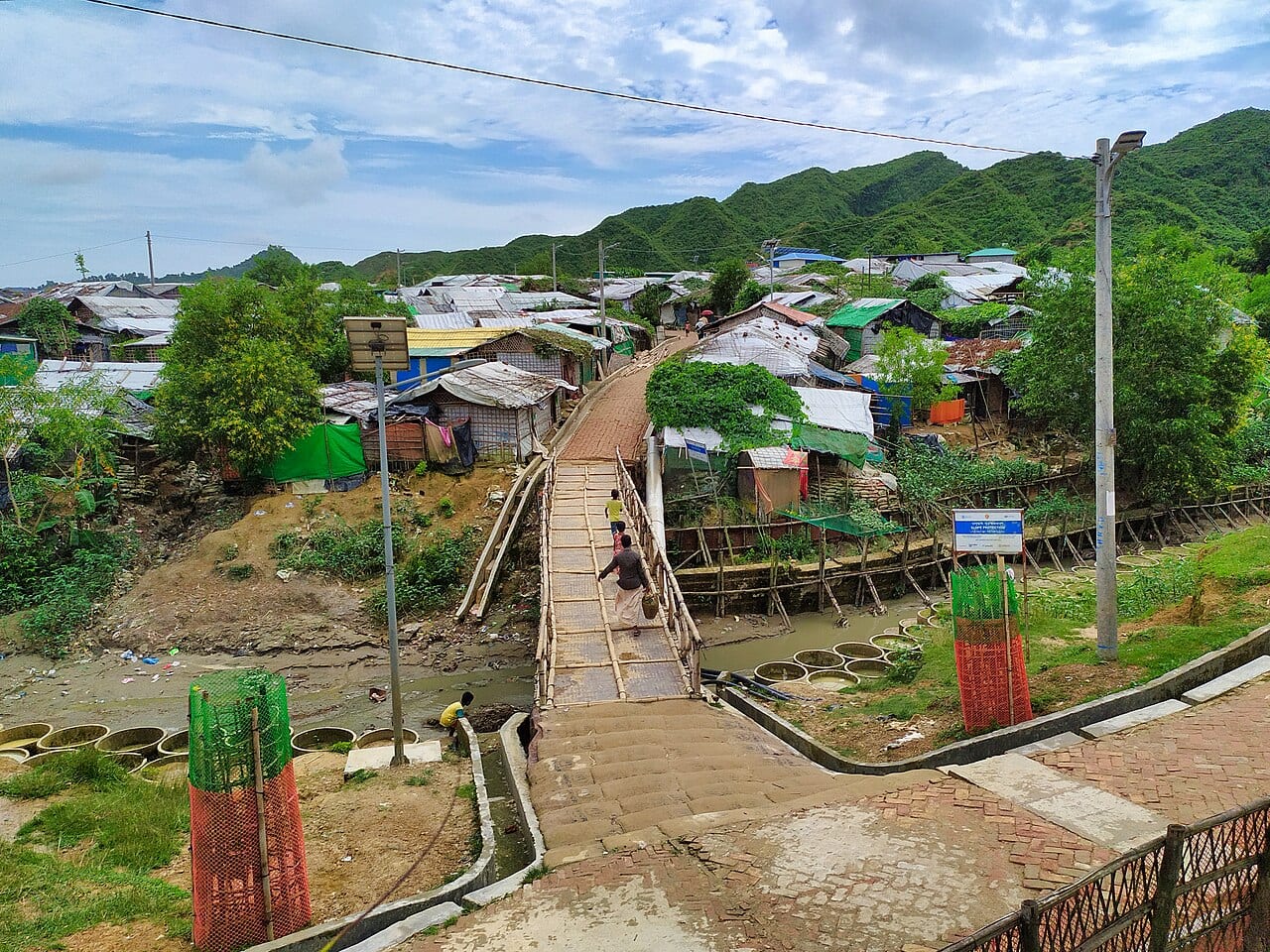
The author describes his first days in Kutupalong camp in the Cox's Bazar area as harsh, as the family stayed temporarily in shelters. He says one of his brothers died for lack of treatment, while another brother gradually recovered after receiving basic care. He considers the camp safer than what they fled, but far from normal life.
The barrier of education and statelessness
Asim says that in 2019 he joined a centre run by a non-governmental organisation that offered informal education, but its certificate is not equivalent to the formal curricula and does not open the door to higher education. He then moved to a school run by members of the Rohingya community, where they teach the Myanmar curriculum. In 2023 he was offered a chance to study in Türkiye, but he lacked a passport, as the Rohingya hold neither Myanmar nor Bangladeshi nationality. He adds that the scholarship committee refused to recognise his secondary school certificate issued by Myanmar's Ministry of Education.
Context and youth work
The article notes that the Rohingya were stripped of citizenship following the 1982 citizenship law. The UN Refugee Agency estimates that about 1.2 million of them have become refugees in Bangladesh. It adds that the military, after the crackdown that ran from August 2016 to January 2017, faced accusations of war crimes, ethnic cleansing and genocide from UN bodies, the International Criminal Court, many governments and rights organisations.
In July 2025, Asim launched the organisation "Arakan Youth for Innovation" with the aim of empowering young Rohingya and preserving their culture. The organisation holds gatherings in which participants share their concerns about life in the camps and seek common solutions.
The author believes the situation in Myanmar remains turbulent after the military coup and the escalation of the civil conflict, noting that armed Buddhist groups extended their control over most of Arakan in 2024 and committed abuses against the Rohingya, which in his view weakens the prospect of their returning home with their rights.
Sources
- Global Voices الأصوات العالمية (CC BY 3.0)