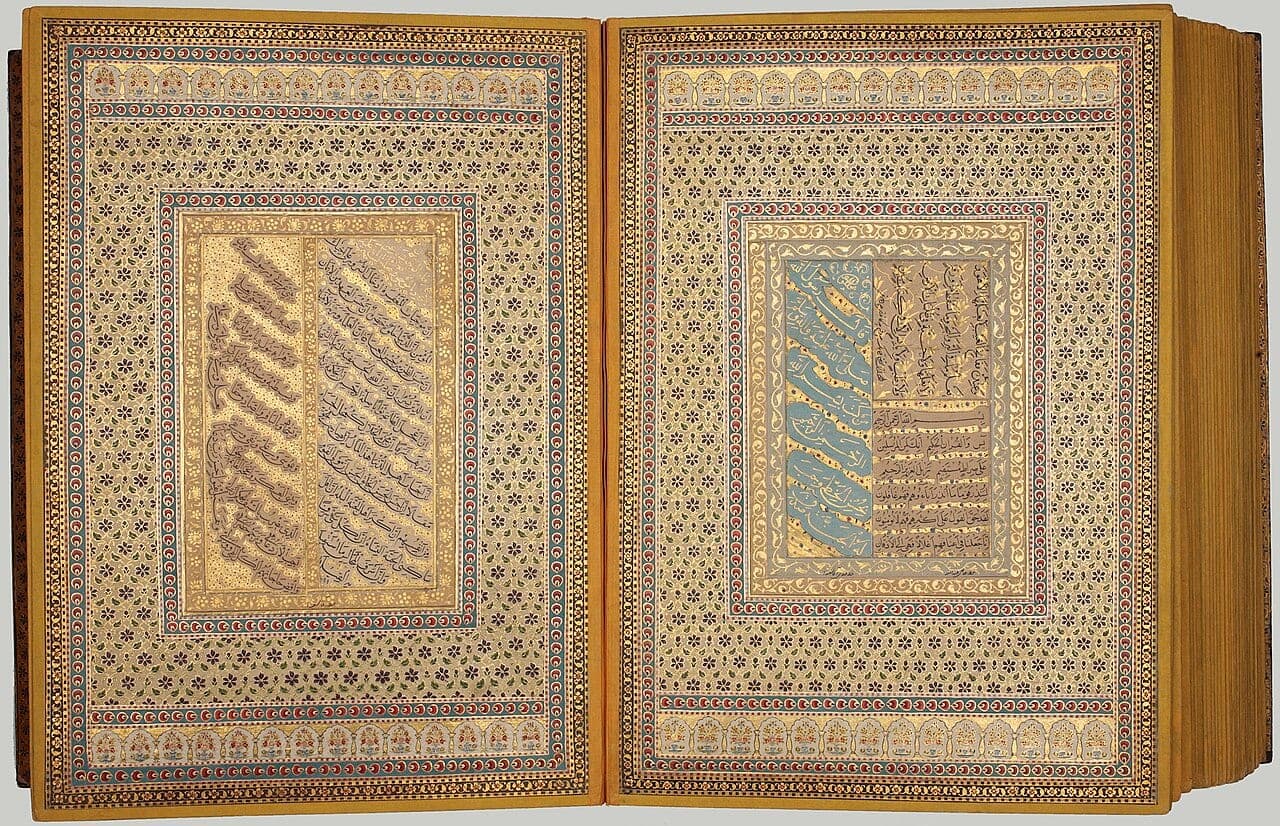
Two volumes of Mughal calligraphy cannot, for the moment, be permanently removed from the UK. The government ranks them with the best examples of the art that still exist. It has placed a temporary bar on their export so that a British gallery or institution has a chance to secure the collection for the nation.
Heritage Minister Baroness Twycross acted on a recommendation from the RCEWA, the independent committee that reviews proposed exports of artworks and cultural objects. According to the government, the committee concluded that the volumes passed two of the Waverley tests, the second and the third. In its view they are of exceptional aesthetic value. They are also important to scholarship on the calligraphers who worked for the Mughal court, on how their workshops operated, and on the diplomatic uses to which such pieces were put.
Deadlines and price
The export licence application will stay on hold until at least 15 February 2027, the last day of a first deferral period during which the government says it is inviting a suitable purchaser to register interest. Once that phase ends, the owners will have 15 business days to weigh any bids that match the £900,000 figure the committee recommended. A second deferral, lasting four months, starts only when an option agreement has been signed, according to the government; its announcement does not set out the terms of that agreement.
The government said the pause allows museums and galleries to gather the necessary money, for instance from philanthropic sources. Alternatively, a private individual could buy the volumes and give them to the nation.
What the volumes are
According to the government, both volumes were assembled from a bigger royal album of calligraphy samples dated to c. 1595-1605. Between them they contain twenty-nine folios of calligraphy plus one drawing, and every folio has illuminated margins. The pieces are thought to be more than 400 years old and are decorated in gold with plant and animal designs.
The original album is believed to have been made at a royal workshop, in Lahore or Agra, either for Akbar, who reigned 1556-1605, or for Prince Salim, his son. It was broken up at some point before 1728. Among the contributors is Muhammad Hussain Kashmiri, described as Akbar's foremost calligrapher, alongside rare pieces by Abd al-Rahim al-Haravi.
The recorded ownership history begins with a private collection in England in the 1980s, followed by a London private collection from the 1980s until 2020. The volumes were then offered at Sotheby's, London, on 27 October 2020 as lot 435, and later passed to AeR Gallery, London.
Why keeping them matters, officials say
Baroness Twycross described work of this standard, by calligraphers of such renown, as exceptionally scarce. "These sheets hold secrets that researchers are desperate to unlock," she said, adding that keeping them publicly accessible in Britain would help reveal how they were made and their place in diplomatic history.
Caroline Shenton, a member of the RCEWA, said a great deal remains unknown about how the leaves were produced and how they were later scattered and rebound, including their connection to similar folios held in the Royal Collection. In her view, that research may depend on the volumes staying in Britain, and she said she hoped a UK institution would come forward.
Prospective buyers can reach the RCEWA on 02072680534 or at rcewa@artscouncil.org.uk. The committee is supported by Arts Council England and its role is to guide the Digital, Culture, Media and Sport Secretary of State on whether objects intended for export are of national importance.