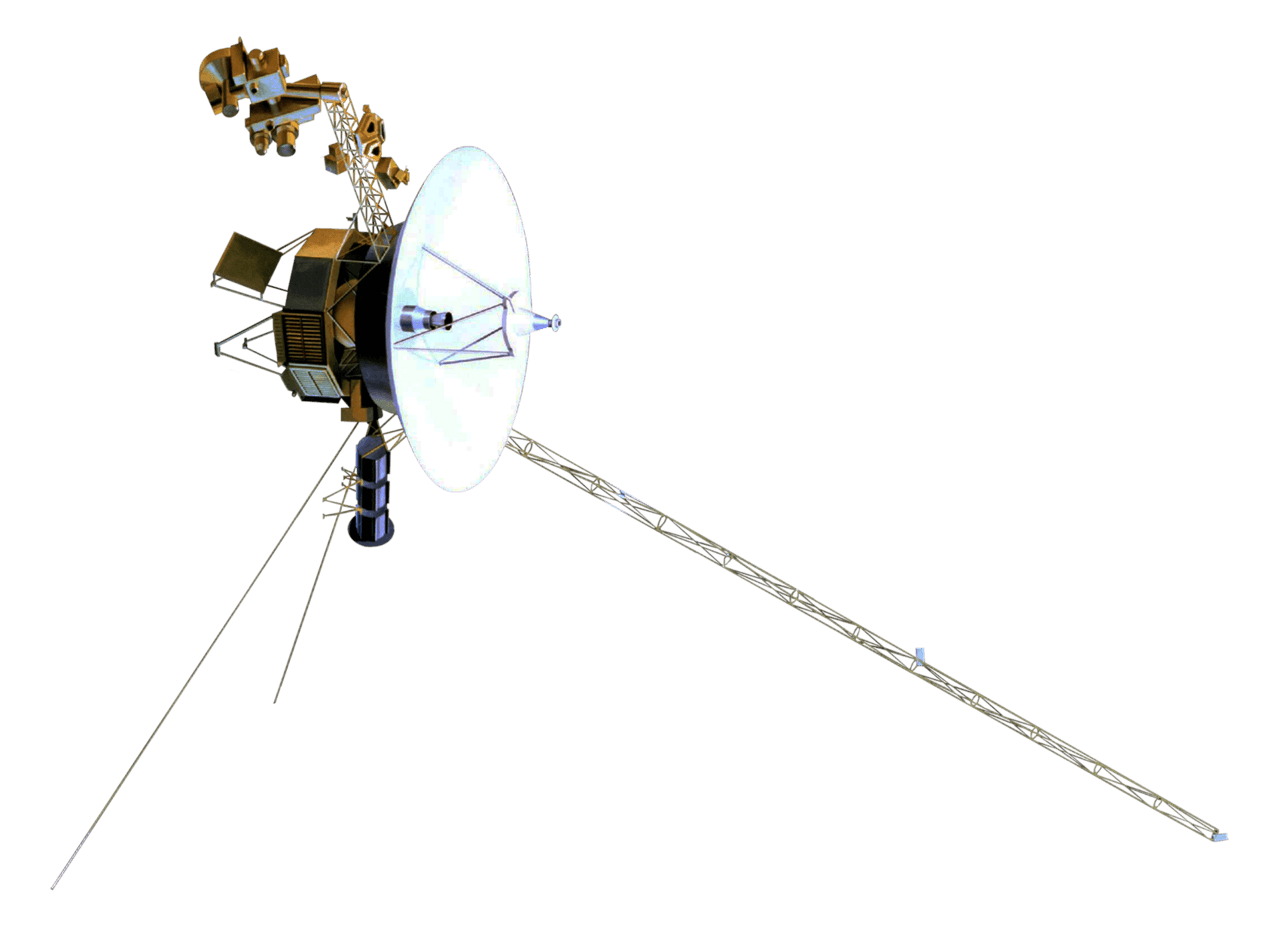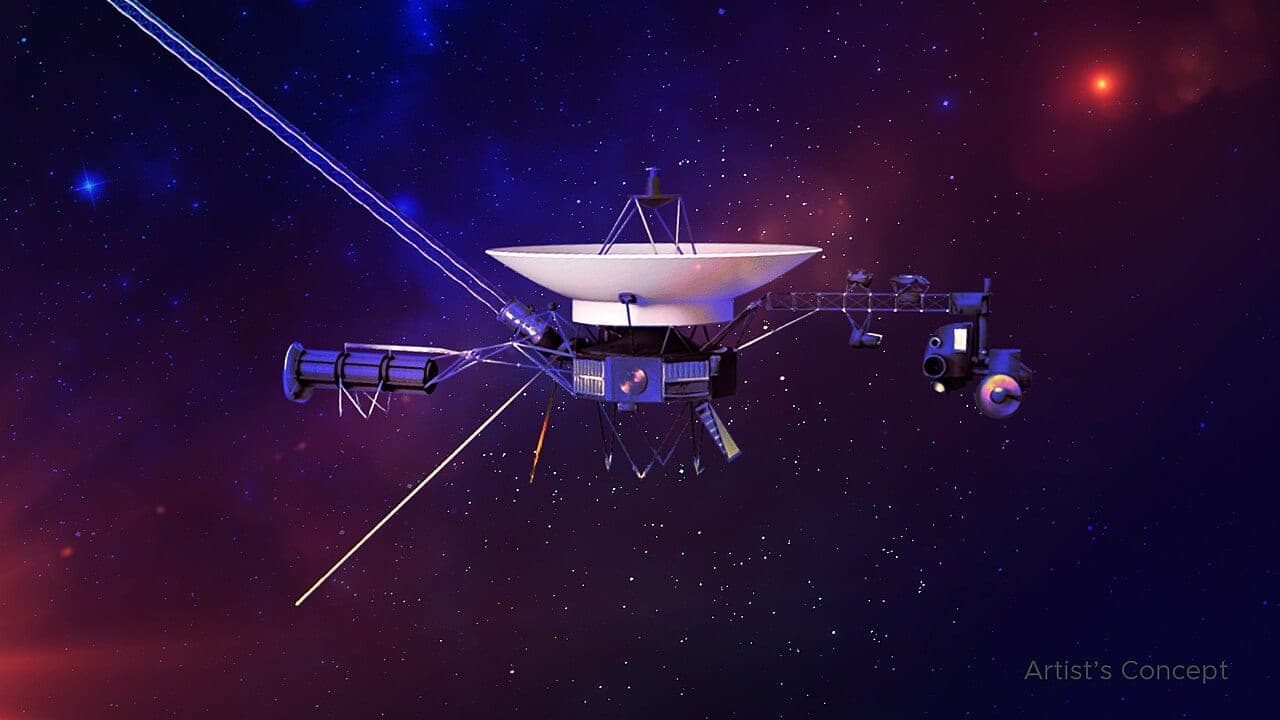
NASA says its Voyager 1 probe has become the first human-made object to be one light-day from Earth. According to the agency, the spacecraft passed the mark at 2:16 a.m. PST (5:16 a.m. EST) on Nov. 18, after more than 49 years in flight. A light-day is the distance light covers in 24 hours, about 16.1 billion miles (25.9 billion kilometers).
A data gap during the milestone
The achievement coincides with a technical puzzle. NASA reports that the Voyager team has received no science or engineering data from the probe since Nov. 14. The spacecraft is still sending a carrier signal, the radio transmission that normally conveys that data. Engineers used this signal, together with trajectory calculations, to confirm the light-day mark, and they are still analyzing the problem with the data.
Team members based in Southern California at the Jet Propulsion Laboratory heard from the probe early Thursday, 24 hours after it crossed the threshold, which is how long its signal needs to reach Earth.
What the distance means
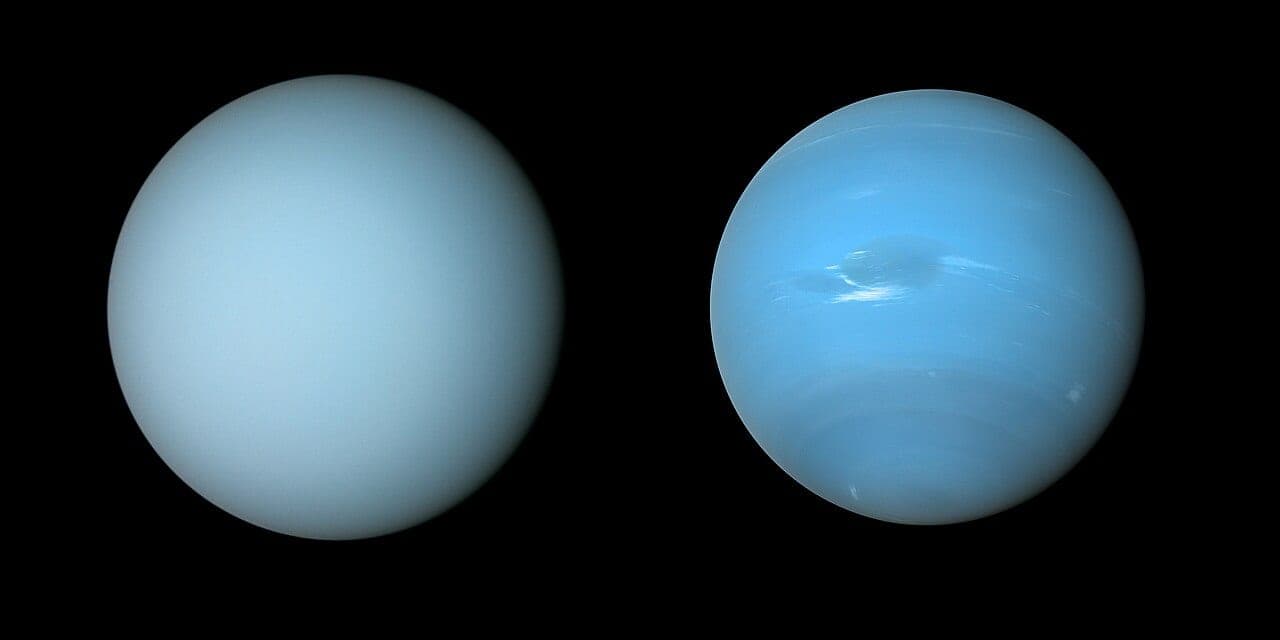
NASA offers some comparisons. Sunlight takes about 1.3 seconds to cross to the Moon and about four hours to reach Neptune. It needs another 20 hours to get from Neptune to Voyager 1. A command sent now takes 24 hours to arrive, and a reply takes 24 more. Project manager Suzanne Dodd said the team listens to the spacecraft daily and sends commands weekly.
NASA Science says Voyager 2, which took a different path after both probes launched in 1977, is on pace to reach one light-day from Earth in November 2035. Voyager 1 is heading toward the star AC +79 3888, also called Gliese 445. According to the agency, it should come within roughly 1.7 light-years of that star in 40,000 years.
Keeping an aging probe running
Voyager 1 travels at about 38,000 mph. NASA says that in 2012 it was the first spacecraft to cross out of the heliosphere, the Sun-generated region of particles and magnetic fields, into interstellar space. Voyager 2 crossed that boundary in 2018.
NASA says the probes have dealt with clogged thrusters and a malfunctioning computer. Their radioisotope power source loses about 4 watts each year as its plutonium decays. Earlier this year, engineers switched off three devices on Voyager 1 and replaced them with lower-power alternatives, a step NASA describes as not without risk. The agency expects the savings to keep the current science instruments running until at least the probes' 50th launch anniversaries next summer.
Sources
- ScienceDaily
- NASA (Public domain (US government work))
- NASA Science (Public domain (US government work))
- NASA Science (Public domain (US government work))
- NASA Science (Public domain (US government work))