Three physicists at the University of California San Diego have described a consistency test aimed at one specific weak point in measurements of the universe's oldest light: whether separate groups of polarization detectors agree with one another on angle. Postdoctoral Fellow Anto I. Lonappan led the work with Brian Keating, Chancellor's Distinguished Professor of Physics, and Kam Arnold, associate professor of physics. The study is published in The Astrophysical Journal Letters.
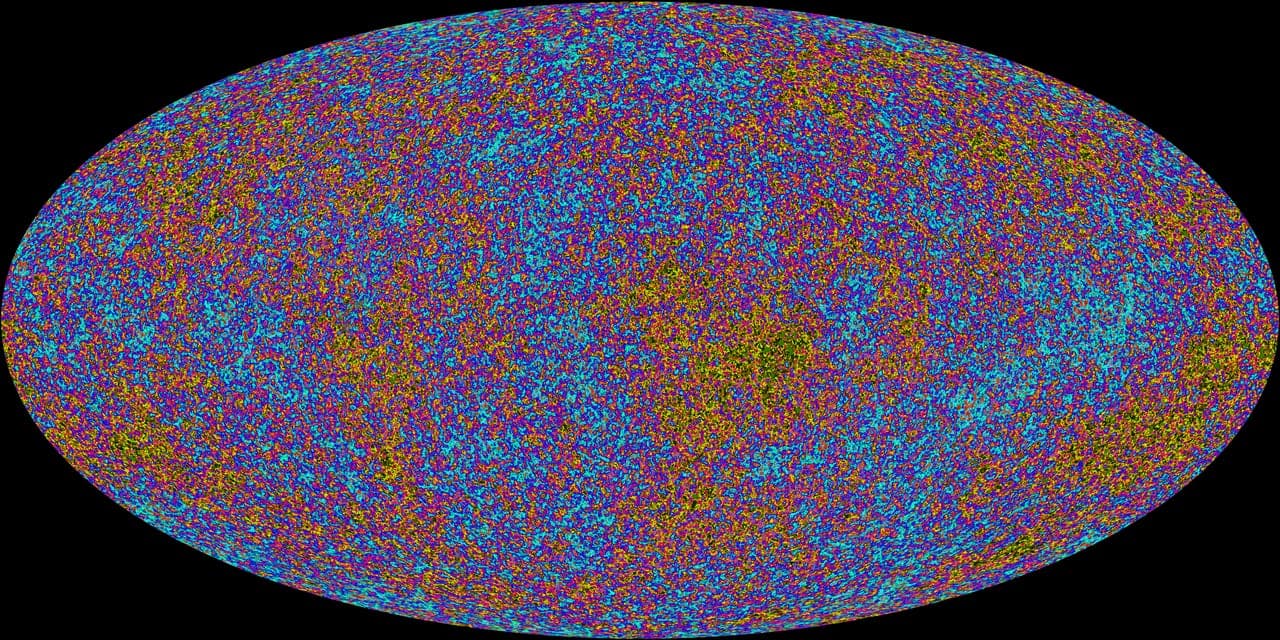
The team tried the method on eight polarization maps from the European Space Agency's Planck satellite. The calibration pattern it obtained matched the one produced by the Minami-Komatsu analysis, the established tool for telling instrumental rotation apart from a cosmic signal. According to the university, the two approaches agree even though they rest on different assumptions.
What the test can and cannot do
The technique sets maps from different detector groups against each other. Any rotation shared by every map, including a genuine cosmic one, cancels out, so only the calibration mismatch between groups survives. That design is deliberate, and it carries a cost. According to UC San Diego, the method on its own cannot pin down the overall polarization angle or the absolute size of any cosmic rotation; that figure still depends on a separate absolute calibration reference.
To show how its output fits with earlier work, the group tied its relative reconstruction to the common calibration value already inferred by Minami-Komatsu. That combination yielded a birefringence angle of 0.37 ± 0.12 degrees, consistent with the existing result. The university's account stresses that this match is not independent proof of rotation in the ancient light. Rather, it shows the new tool can reproduce the established framework while offering a second route for spotting calibration problems.
The signal at stake
The broader target is cosmic birefringence, a possible slight turning of the polarization of the cosmic microwave background (CMB) during its passage through space. The CMB dates from about 380,000 years after the Big Bang, when the cooling universe became transparent and scattering off free electrons left the radiation weakly polarized. Previous analyses suggest any turn may be just a fraction of a degree, accumulated during nearly 14 billion years in transit. According to UC San Diego, confirmation could signal processes the Standard Model does not explain and bear on the puzzles of dark matter and dark energy.
The difficulty is that a telescope whose detectors are off by a similarly tiny angle would create an essentially identical effect. The university notes that, from the CMB signal alone, a uniform cosmic rotation and a shared error in detector orientation cannot be told apart. Because the new test discards common rotations, it does not settle that ambiguity; its value lies in catching inconsistencies between detector groups. Lonappan said the team wants assurance that the calibration is trustworthy before reading a tiny rotation as new physics.
Relevance to gravitational-wave searches
Calibration also matters in the hunt for primordial gravitational waves. CMB polarization comes in two patterns: symmetric E modes, first detected in 2002 and linked to density variations, and curl-like B modes. B modes caused by gravitational lensing have already been observed, but a B-mode signal from primordial gravitational waves has not. A slight angle error can leak some of the E-mode signal into spurious B modes, and the university says the method could help flag such errors between detector groups.
Keating, principal investigator at the Simons Observatory, said finding primordial B modes would reshape knowledge of the early universe, and that "the measurement must survive rigorous calibration checks."