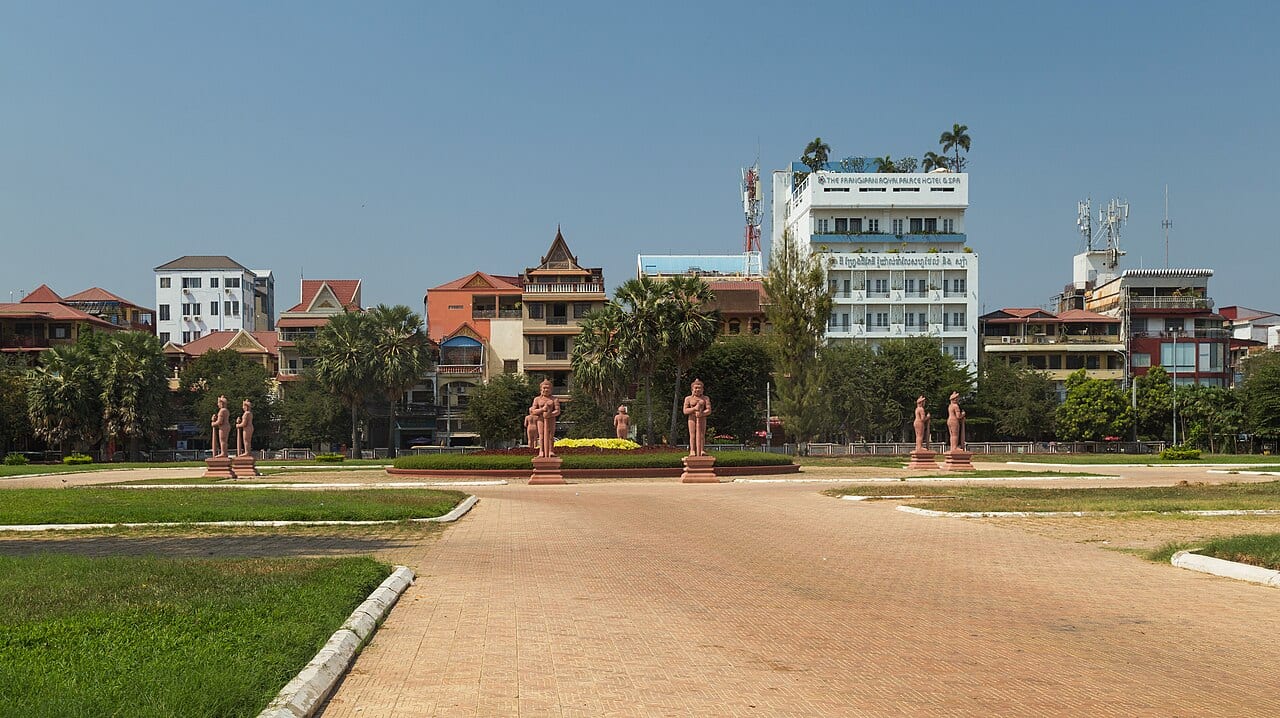
Cambodia's law on peaceful demonstrations, passed in 2009, promised to protect the right to organise and take part in public gatherings through "freedom parks" in every province. According to Global Voices, in practice only one has been set up, and the authorities often prevent it from being used for protests.
A single park, often off limits
In 2026, the authorities refused permission to use the Phnom Penh park during International Women's Day. They suggested that groups hold their celebrations at their own offices. The municipality also warned that organisers could face legal action if the event affected security, public order or social stability.
On Labour Day, 1 May, the same bans applied. The authorities only tolerated ten people demonstrating and delivering petitions to government bodies.
The Cambodian Center for Human Rights (CCHR) has documented other episodes. In January 2015, demonstrators from communities affected by evictions were blocked from passing. In September 2020, barricades were put up, ostensibly for security and order during the pandemic, and United Nations special rapporteurs expressed concern about those measures.
A park far from the centre
The Phnom Penh park was a significant venue for opposition demonstrations in 2013 and 2014. Later, the space was relocated: the new park opened in 2017 far from the urban core, in an area of warehouses and industrial units.
Speaking to VOA Khmer, the Cambodia representative of the Office of the United Nations High Commissioner for Human Rights warned that moving the park away from the public would reduce the expressive value of gatherings and hinder the exercise of fundamental rights. The CCHR had already warned in 2011 of the risk that parks would be placed where few citizens could see or hear the demonstrators, which would defeat the purpose of protesting.
Objections to the law since 2009
As early as 2009, the year the law was passed, human rights organisations criticised several of its provisions. One of them requires the number of participants to be stated in the notification letter, which they considered absurd because it is impossible to predict. Under a strict reading, a wrong estimate could make the protest illegal.
Amnesty International added that the law neither recognises nor protects spontaneous gatherings, which arise without prior organisation, usually in reaction to a specific event, and therefore cannot be notified in advance.
Unequal meetings with the authorities
The CCHR also described how contacts between civil groups and officials unfold. According to the centre, a few members of the organisations face numerous government officials, many of them senior. When the authorities announce their decision, they often leave insufficient time to discuss or debate it.
The centre summed up that the law not only serves to confine protests to the park, but that use of the park itself is increasingly restricted or denied. In its view, these restrictions threaten to narrow Cambodians' democratic space and to reduce democracy to nothing more than voting.
Calls for review ahead of the polls
Human rights organisations are calling for the law to be reformed, as they anticipate more mobilisations and gatherings ahead of the 2027 commune/sangkat elections and the 2028 National Assembly elections.
Sources
- Global Voices en Español (CC BY 3.0)