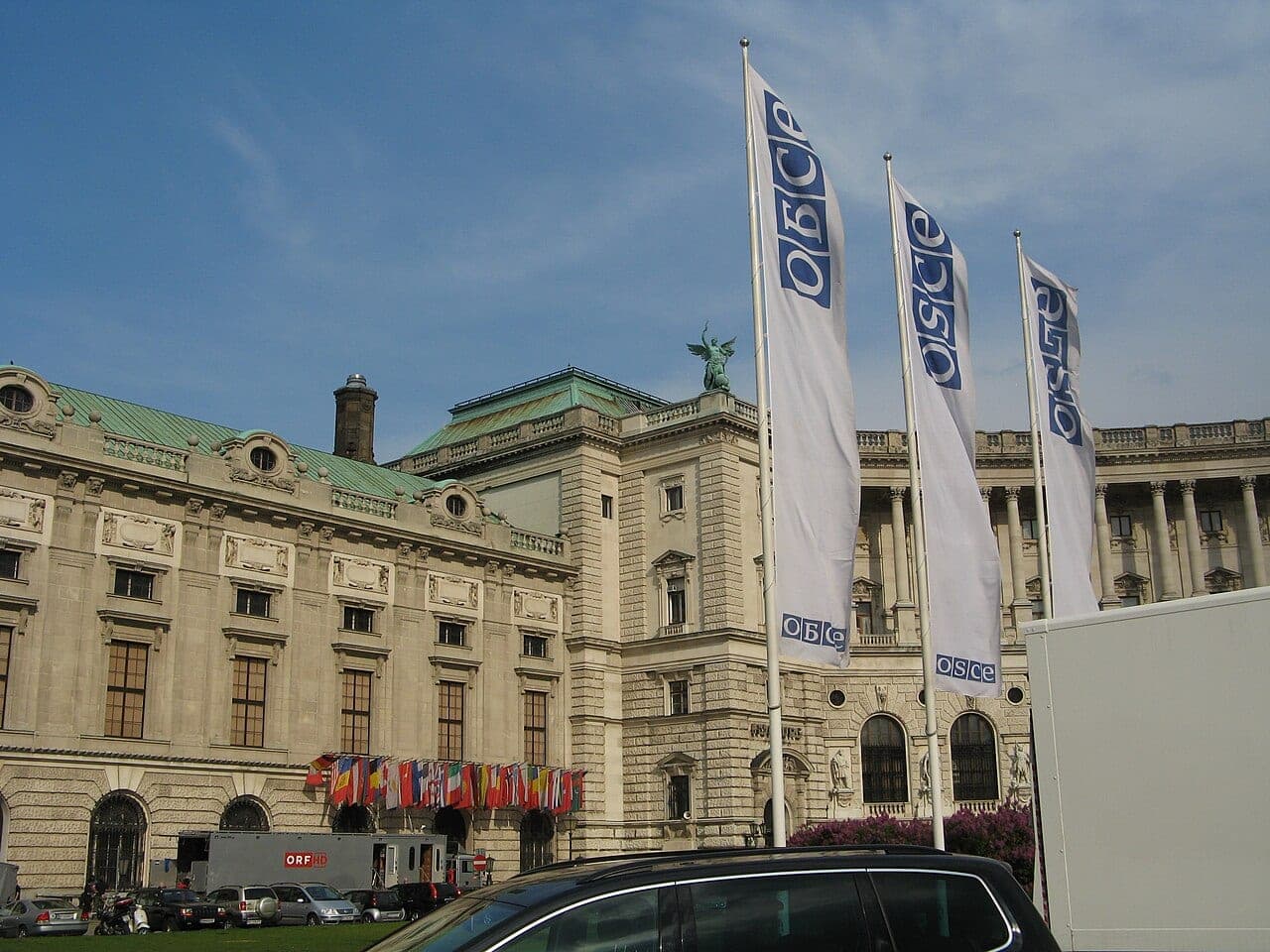
Britain has used a statement at the OSCE to insist that members of Ukraine's armed forces are lawful combatants. It also accused Russia of abusing and unlawfully prosecuting Ukrainian troops it has captured. Colonel Joby Rimmer, the UK Senior Military Advisor, delivered the remarks on Armistice Day. He was responding to what he called repeated Russian misrepresentation of Ukraine's military in the forum.
According to Rimmer, Moscow had characterised support for Ukraine's defence as "financing of terrorism" the previous week. He rejected that framing, saying Ukrainian servicemen and servicewomen were using the inherent right of self-defence that belongs to their state. "They are not terrorists, and they should not be described as such," he said.
Allegations of abuse in captivity
The gravest accusations concerned prisoners. The UN Human Rights Monitoring Mission interviewed 853 Ukrainian POWs, according to the UK statement, and more than 96% said they had suffered torture or ill-treatment while held by Russia. Rimmer drew a sharp contrast between the two sides. He said the Mission can visit official internment sites in Ukrainian-controlled territory regularly and without hindrance. Russia, by contrast, still keeps independent monitors from similar access to Ukrainian prisoners held in Russia or in areas it occupies.
He linked that abuse to prosecutions. He cited a March report to the Human Rights Council by the Independent International Commission of Inquiry on Ukraine, numbered A/HRC/61/61. As the UK summarised it, the Commission found that courts in Russia and in Russian-occupied parts of Ukraine had tried Ukrainian civilians and POWs on charges that included terrorism. Those trials denied defendants basic fair-trial guarantees and systematically depended on evidence that was either fabricated or extracted through torture or ill-treatment, the Commission found. It concluded that the resulting grave breaches of IHL amounted to war crimes.
The legal case
In the UK's view, Russia's full-scale invasion flagrantly breaches the UN Charter. Article 51 of the Charter entitles Ukraine to defend itself, and international law permits other states to help. Rimmer said Ukrainian troops serve in the regular military of a country engaged in an international armed conflict. That makes them combatants under Article 43 of Additional Protocol I, with a right to take direct part in the fighting; only medical staff and chaplains are excluded.
If captured, Article 4 of the 3rd Geneva Convention grants them prisoner-of-war status, Rimmer said. That status requires humane treatment and bars persecution simply for having fought. Attaching a terrorism label, the UK argued, neither strips that status nor justifies withholding legal protections. Rimmer said Russia calls its war a "special military operation" in an attempt to deny that an international armed conflict exists and to ignore what it owes Ukrainian POWs under the Geneva Conventions. The law, he said, is determined by facts.
Remembrance and the war today
Rimmer tied the argument to the day of remembrance. Among those honoured, he said, were millions from across the Soviet Union, Russians and Ukrainians among them, whose shared sacrifice played a decisive part in defeating Nazism. That sacrifice deserved honour, he said, but could not serve as justification for Russian aggression now.
He said Russia was free to end the war whenever it chose by pulling its forces out of Ukraine's internationally recognised territory. Until then, he said, "the UK will stand with Ukraine for as long as it takes," with the stated aim of a peace that is both just and lasting.